jll clinical samples

The Growing Importance of Intelligent Clinical Trial Logistics in 2026

Why Logistics Is Now Central to Clinical Trial Success

In 2026, clinical trial logistics has become a defining factor in the success of life sciences research. As trials grow more complex, distributed and time-critical, logistics is no longer a background operational function. Instead, it plays a central role in protecting data integrity, maintaining regulatory compliance and ensuring research timelines stay on track.

From investigational medicinal products to high-value biological samples, the movement of materials between laboratories, clinical sites and storage facilities must be precise, controlled and reliable.

Clinical Trial Supply Chains Are Becoming More Complex

Modern clinical trials rarely operate from a single site. Multi-centre trials, global collaboration and decentralised study models are now common, increasing the number of handovers, transport routes and regulatory touchpoints involved.

At the same time, the rise of biologics, cell therapies and personalised medicines has introduced stricter temperature and handling requirements. Even minor deviations during transit can compromise sample integrity or delay trials, making specialist logistics planning essential.

The UK’s Role in Global Clinical Research

The UK continues to play a significant role in global clinical research, supported by strong academic institutions, specialist laboratories and an established regulatory environment. As trial activity increases, so does the demand for logistics providers who understand the specific needs of UK-based life science organisations.

Efficient logistics supports faster trial initiation, smoother site coordination and reduced risk across complex study designs. For sponsors and CROs, this reliability can influence both trial outcomes and long-term investment decisions.

Real-Time Visibility Is Now an Industry Expectation

In life sciences logistics, visibility is no longer a value-add. It is an expectation. Sponsors increasingly require real-time insight into the location and condition of clinical trial materials throughout transit.

Temperature monitoring, condition tracking and secure chain-of-custody records are now standard requirements, particularly for sensitive or high-value shipments. This level of visibility helps mitigate risk, supports audit readiness and allows rapid intervention if issues arise during transport.

Cold Chain Logistics Continues to Expand

Cold chain logistics remains one of the fastest-growing areas within life sciences supply chains. Many modern therapies require strict temperature control throughout storage and transport, from initial manufacture to final delivery.

Maintaining cold chain integrity demands specialist packaging, validated processes and experienced handling teams. As trial volumes and complexity increase, reliable cold chain logistics becomes critical to ensuring regulatory compliance and protecting research investment.

Digital Tools Are Changing How Logistics Is Planned

Digitalisation is reshaping how clinical trial logistics is managed. Data-driven planning tools now allow logistics providers and sponsors to model routes, assess risks and plan contingencies before shipments begin.

Automated documentation, integrated tracking systems and predictive analytics help reduce errors and improve consistency across trial phases. These tools also support scalability, allowing logistics operations to adapt as trials expand or protocols evolve.

Why Specialist Logistics Partners Matter

Life science organisations are increasingly choosing specialist logistics providers rather than general carriers. The reason is simple: clinical trial logistics requires deep sector knowledge, regulatory understanding and operational precision.

Specialist partners support compliance, reduce the risk of temperature excursions, and provide confidence that critical materials will arrive on time and in the correct condition. This expertise becomes especially valuable during complex, multi-site or international trials.

Logistics as an Enabler of Scientific Progress

As clinical research continues to advance in 2026, logistics is playing a more visible and strategic role in enabling innovation. Reliable, intelligent logistics supports faster trials, protects valuable samples and helps life science organisations move discoveries from lab to patient with greater confidence.

For organisations operating in the UK life sciences sector, partnering with a specialist logistics provider is not just about transport. It is about safeguarding research, maintaining momentum and supporting the delivery of scientific breakthroughs.

Global Competition for Lab Space and Capacity Constraints

Laboratory relocations are among the most complex and high-risk moves any organisation can undertake. Unlike traditional office moves, laboratory environments contain sensitive research, hazardous materials, temperature-critical samples, and highly specialised equipment. Without robust business continuity planning, even a short period of disruption can result in lost data, compromised samples, regulatory breaches, and major financial impact.

This article explores why continuity planning is essential during laboratory relocation projects and how specialist lab logistics providers protect research, operations, and compliance at every stage.

Why Laboratory Relocation Carries Higher Risk Than Standard Business Moves

Laboratories operate in tightly controlled environments. Any interruption to power, temperature, security, or safety systems can have immediate and irreversible consequences. Common risks during poorly planned lab relocations include:

  • Sample degradation or loss
  • Equipment misalignment or damage
  • Chemical exposure incidents
  • Contamination of clean environments
  • Regulatory non-compliance
  • Project and research delays

Unlike office disruption, laboratory downtime can set back months or years of work.

What Business Continuity Means in a Laboratory Environment

Business continuity in laboratory relocation is not just about keeping desks operating. It means protecting:

  • Critical research programmes
  • Clinical trials and regulated testing
  • Intellectual property
  • Live samples and reagents
  • Staff safety
  • Data integrity

A specialist laboratory relocation strategy ensures that essential scientific activity continues with minimal interruption before, during, and after the move.

Phased Laboratory Moves Reduce Operational Risk

One of the most effective continuity strategies is phased relocation. Instead of stopping all activity at once, key workflows are maintained while different laboratories and departments are transitioned in controlled stages.

Benefits of phased lab moves include:

  • Reduced downtime for core research teams
  • Ability to validate new spaces before full occupation
  • Better environmental stabilisation
  • Improved risk isolation
  • Greater control over regulatory checks

Each phase is planned around scientific priorities rather than pure logistics.

Protecting Samples, Reagents, and Temperature Controlled Materials

Many laboratory relocations involve ultra-low temperature freezers, cryogenic storage, incubators, and cold chain materials. Any temperature excursion can permanently damage irreplaceable samples.

Continuity planning includes:

  • Live environmental monitoring
  • Validated transit routes
  • Backup power planning
  • Dry shipper and cold chain logistics
  • Emergency response protocols

Specialist lab logistics providers treat sample protection as a mission-critical process, not just a handling task.


Equipment Decommissioning, Transport, and Recommissioning

Laboratory equipment relocation requires specialist engineering knowledge. Incorrect disconnection or reinstallation can invalidate calibration, compromise performance, and breach regulatory compliance.

Continuity protection includes:

  • OEM approved decommissioning
  • Cleanroom and controlled environment handling
  • Vibration controlled transport
  • Revalidation and recertification
  • IQ, OQ, and PQ support where required

This ensures that dislocated equipment returns to full operational readiness as quickly and safely as possible.

Regulatory Compliance and Chain of Custody

Laboratory relocations operate under strict regulatory frameworks including:

  • GLP
  • GMP
  • MHRA
  • ISO standards
  • Health and Safety legislation

Business continuity planning must include full chain-of-custody documentation for:

  • Samples
  • Chemicals
  • Controlled drugs
  • Hazardous waste
  • Sensitive data

Documented audit trails protect organisations from regulatory breaches and reputational risk.

Data, IT, and Instrument Connectivity

Modern laboratories are digitally driven. Instruments, LIMS platforms, monitoring software, and security systems must all be maintained throughout the move.

Continuity planning includes:

  • Pre-move IT migration mapping
  • Instrument data protection
  • Network readiness at the new site
  • Access control and security continuity
  • Cyber security validation

Without this integrated approach, laboratories risk critical data loss or system failure.

Sustainability and Responsible Laboratory Clearance

Laboratory relocation also presents an opportunity to improve sustainability performance. Planned clearance allows organisations to:

  • Reuse surplus laboratory furniture
  • Redeploy functional equipment
  • Recycle compliant materials
  • Safely dispose of chemical waste
  • Improve ESG and carbon reporting

Unplanned laboratory clearance often leads to unnecessary incineration and landfill.

Why Specialist Lab Logistics Providers Are Essential

General business movers are not equipped to manage the risks of scientific environments. Specialist laboratory logistics providers offer:

  • Trained lab relocation technicians
  • Hazardous materials handling
  • Cleanroom compliant transport
  • Cryogenic logistics expertise
  • Regulatory documentation
  • Integrated engineering, IT, and asset management

This specialist model ensures that business continuity is protected at every level.

The Importance of Business Continuity Planning During Laboratory Relocations

Laboratory relocations are among the most complex and high-risk moves any organisation can undertake. Unlike traditional office moves, laboratory environments contain sensitive research, hazardous materials, temperature-critical samples, and highly specialised equipment. Without robust business continuity planning, even a short period of disruption can result in lost data, compromised samples, regulatory breaches, and major financial impact.

This article explores why continuity planning is essential during laboratory relocation projects and how specialist lab logistics providers protect research, operations, and compliance at every stage.

Why Laboratory Relocation Carries Higher Risk Than Standard Business Moves

Laboratories operate in tightly controlled environments. Any interruption to power, temperature, security, or safety systems can have immediate and irreversible consequences. Common risks during poorly planned lab relocations include:

  • Sample degradation or loss
  • Equipment misalignment or damage
  • Chemical exposure incidents
  • Contamination of clean environments
  • Regulatory non-compliance
  • Project and research delays

Unlike office disruption, laboratory downtime can set back months or years of work.

What Business Continuity Means in a Laboratory Environment

Business continuity in laboratory relocation is not just about keeping desks operating. It means protecting:

  • Critical research programmes
  • Clinical trials and regulated testing
  • Intellectual property
  • Live samples and reagents
  • Staff safety
  • Data integrity

A specialist laboratory relocation strategy ensures that essential scientific activity continues with minimal interruption before, during, and after the move.

Phased Laboratory Moves Reduce Operational Risk

One of the most effective continuity strategies is phased relocation. Instead of stopping all activity at once, key workflows are maintained while different laboratories and departments are transitioned in controlled stages.

Benefits of phased lab moves include:

  • Reduced downtime for core research teams
  • Ability to validate new spaces before full occupation
  • Better environmental stabilisation
  • Improved risk isolation
  • Greater control over regulatory checks

Each phase is planned around scientific priorities rather than pure logistics.

Protecting Samples, Reagents, and Temperature Controlled Materials

Many laboratory relocations involve ultra-low temperature freezers, cryogenic storage, incubators, and cold chain materials. Any temperature excursion can permanently damage irreplaceable samples.

Continuity planning includes:

  • Live environmental monitoring
  • Validated transit routes
  • Backup power planning
  • Dry shipper and cold chain logistics
  • Emergency response protocols

Specialist lab logistics providers treat sample protection as a mission-critical process, not just a handling task.


Equipment Decommissioning, Transport, and Recommissioning

Laboratory equipment relocation requires specialist engineering knowledge. Incorrect disconnection or reinstallation can invalidate calibration, compromise performance, and breach regulatory compliance.

Continuity protection includes:

  • OEM approved decommissioning
  • Cleanroom and controlled environment handling
  • Vibration controlled transport
  • Revalidation and recertification
  • IQ, OQ, and PQ support where required

This ensures that dislocated equipment returns to full operational readiness as quickly and safely as possible.

Regulatory Compliance and Chain of Custody

Laboratory relocations operate under strict regulatory frameworks including:

  • GLP
  • GMP
  • MHRA
  • ISO standards
  • Health and Safety legislation

Business continuity planning must include full chain-of-custody documentation for:

  • Samples
  • Chemicals
  • Controlled drugs
  • Hazardous waste
  • Sensitive data

Documented audit trails protect organisations from regulatory breaches and reputational risk.

Data, IT, and Instrument Connectivity

Modern laboratories are digitally driven. Instruments, LIMS platforms, monitoring software, and security systems must all be maintained throughout the move.

Continuity planning includes:

  • Pre-move IT migration mapping
  • Instrument data protection
  • Network readiness at the new site
  • Access control and security continuity
  • Cyber security validation

Without this integrated approach, laboratories risk critical data loss or system failure.

Sustainability and Responsible Laboratory Clearance

Laboratory relocation also presents an opportunity to improve sustainability performance. Planned clearance allows organisations to:

  • Reuse surplus laboratory furniture
  • Redeploy functional equipment
  • Recycle compliant materials
  • Safely dispose of chemical waste
  • Improve ESG and carbon reporting

Unplanned laboratory clearance often leads to unnecessary incineration and landfill.

Why Specialist Lab Logistics Providers Are Essential

General business movers are not equipped to manage the risks of scientific environments. Specialist laboratory logistics providers offer:

  • Trained lab relocation technicians
  • Hazardous materials handling
  • Cleanroom compliant transport
  • Cryogenic logistics expertise
  • Regulatory documentation
  • Integrated engineering, IT, and asset management

This specialist model ensures that business continuity is protected at every level.

CABI – Culture Collection Relocation

THE PROJECT

Johnsons Lab Logistics was appointed by CABI to undertake the complex relocation of their extensive culture collection, comprising approximately 200,000 fungal samples. The project required meticulous planning and execution to ensure full compliance with dangerous goods regulations, biological safety standards, and the client’s critical continuity needs.

SPECIALIST PACKAGING AND COMPLIANCE

Given the nature of the materials, strict adherence to UN regulations governing the transport of biological and potentially hazardous substances was paramount. To achieve this, all samples were prepared and transported in triple-layer compliant packaging, consisting of:
1.Primary receptacle: The original large sample trays containing the fungal cultures.
2.Secondary packaging: Each tray was sealed within vacuum-sealed protective bags, providing an additional containment barrier.
3.Outer packaging: The secondary units were then placed within certified UN-approved crates, providing structural integrity and compliance with Dangerous Goods transport requirements.
To prevent movement or damage during transit, the secondary packaging was secured with cushioning materials including bubble wrap and crush-resistant paper. This ensured that, under normal carriage conditions, receptacles could not break, be punctured, or leak their contents.

EXECUTION

The move was completed over a six-day programme, with operations scheduled to minimise disruption to CABI’s research activities. Each stage was logged and quality checked to ensure the safe transfer of every sample. Our team worked closely with CABI’s laboratory and health and safety representatives throughout, providing real-time progress updates and transparent documentation for full traceability. The dedicated ADR-trained crew, supported by our DGSA, ensured all regulatory requirements were met without incident.

SERVICES

The relocation involved a bench-to-bench transfer of all fungi samples from CABI’s Egham site to their new Berkshire facility. Key elements of the scope included:

Full packing, transport, and unpacking of circa 200,000 samples.
Dedicated delivery team, comprising ADR-trained packers and drivers.
Dangerous Goods Safety Advisor (DGSA) oversight, with DGN documentation created by our in-house DGSA, Stuart Williams.
Bench-to-bench handling, ensuring each sample was relocated directly to its designated position in the destination laboratory to maintain order, traceability, and integrity.

A Landmark Moment for Research and for Specialist Relocation Expertise

Supporting Oxford University’s New Life & Mind Building

The Johnsons Lab Logistics team is proud to have played a key role in one of the UK’s most exciting academic developments. Oxford University’s £200 million Life & Mind Building, opened in autumn 2025, brings together world-leading teaching and research in biology and experimental psychology.

Spanning over 269,000 sq ft and supporting more than 1,400 academics, researchers, support staff and postgraduates, plus approximately 1,000 undergraduates, the building is a true hub for scientific innovation. Its scale, specialist facilities and technical demands also made the relocation a significant challenge, one perfectly suited to our laboratory logistics experts.

Our Role: A Complete Relocation Solution

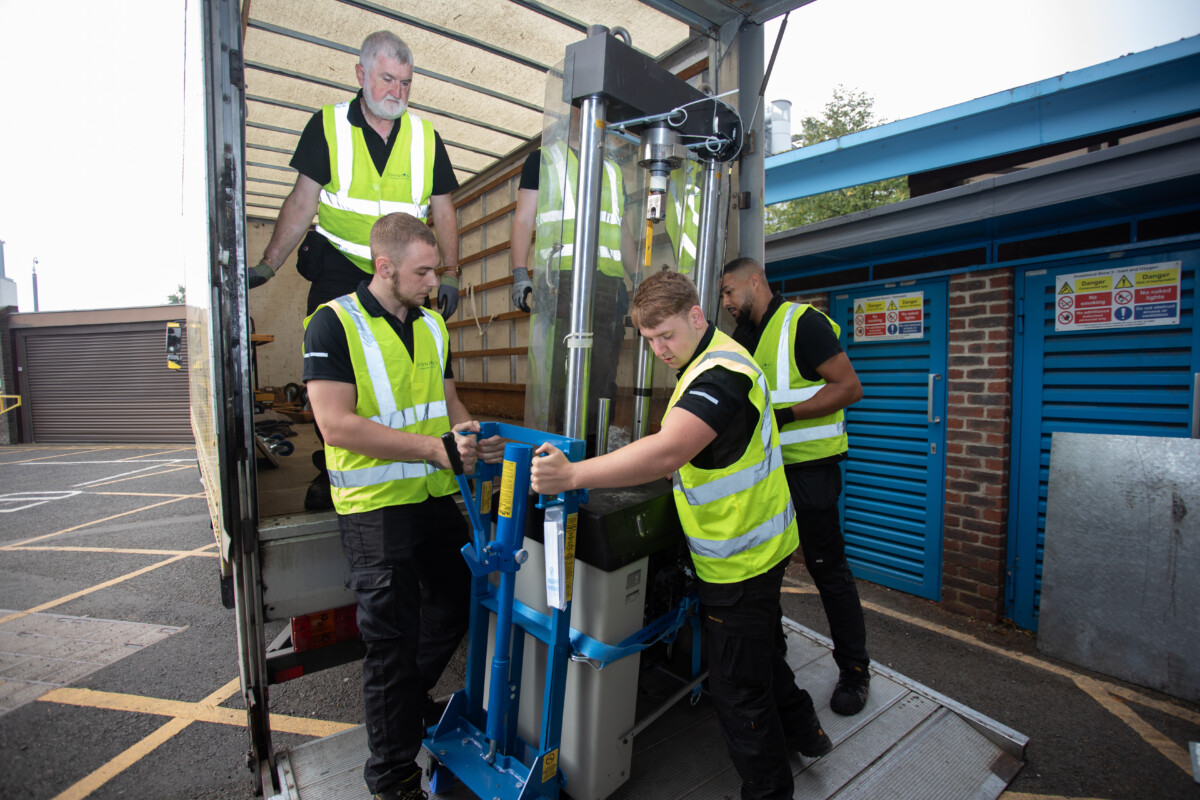
Johnsons Lab Logistics was appointed to manage the full relocation of scientific, teaching and specialist research equipment into the new building. With deep experience in complex laboratory and high-tech moves, our team delivered a fully integrated, end-to-end solution.

Key elements of our service included:

  • Collaborative move-planning workshops aligned to the building’s detailed logistics design, including service yard access, goods lifts and large-vehicle turning areas.
  • Specialist handling and coordination of sensitive laboratory and research assets such as controlled environment chambers, imaging suites, motor labs and plant-science facilities.
  • Precise project-management and live-tracked asset movements, ensuring minimal downtime for critical research operations, all completed under strict GxP compliance.
  • Close stakeholder collaboration with university estates teams, teaching services and research leads to validate routes, schedule moves and ensure a seamless handover of every space.

Why Specialist Expertise Matters

Moving high-value, high-risk scientific environments demands absolute precision. This project highlights what a specialist laboratory logistics partner brings:

  • Technical expertise in handling lab-grade equipment and controlled environments
  • Logistical accuracy built around complex building access and infrastructure
  • Integrated stakeholder planning to safeguard research continuity
  • Full-lifecycle support, from initial asset surveys through to settling-in and post-move validation

The Life & Mind Building represents a new era of interdisciplinary research at Oxford. By delivering a smooth and secure transition into this landmark facility, Johnsons Lab Logistics has reinforced its reputation as a trusted partner for the most challenging laboratory and research relocations.

James Oakes, Director of Work Winning at Johnsons 1871, said:

“Supporting the relocation into the Life & Mind Building has been a privilege. The scale and scientific importance of this project demanded absolute attention to detail, and our team delivered exactly that. We’re incredibly proud to help create the foundation for future discoveries at one of the world’s leading universities.”